Because everyone loves a good story
Tolkien, Heaney, and Beowulf
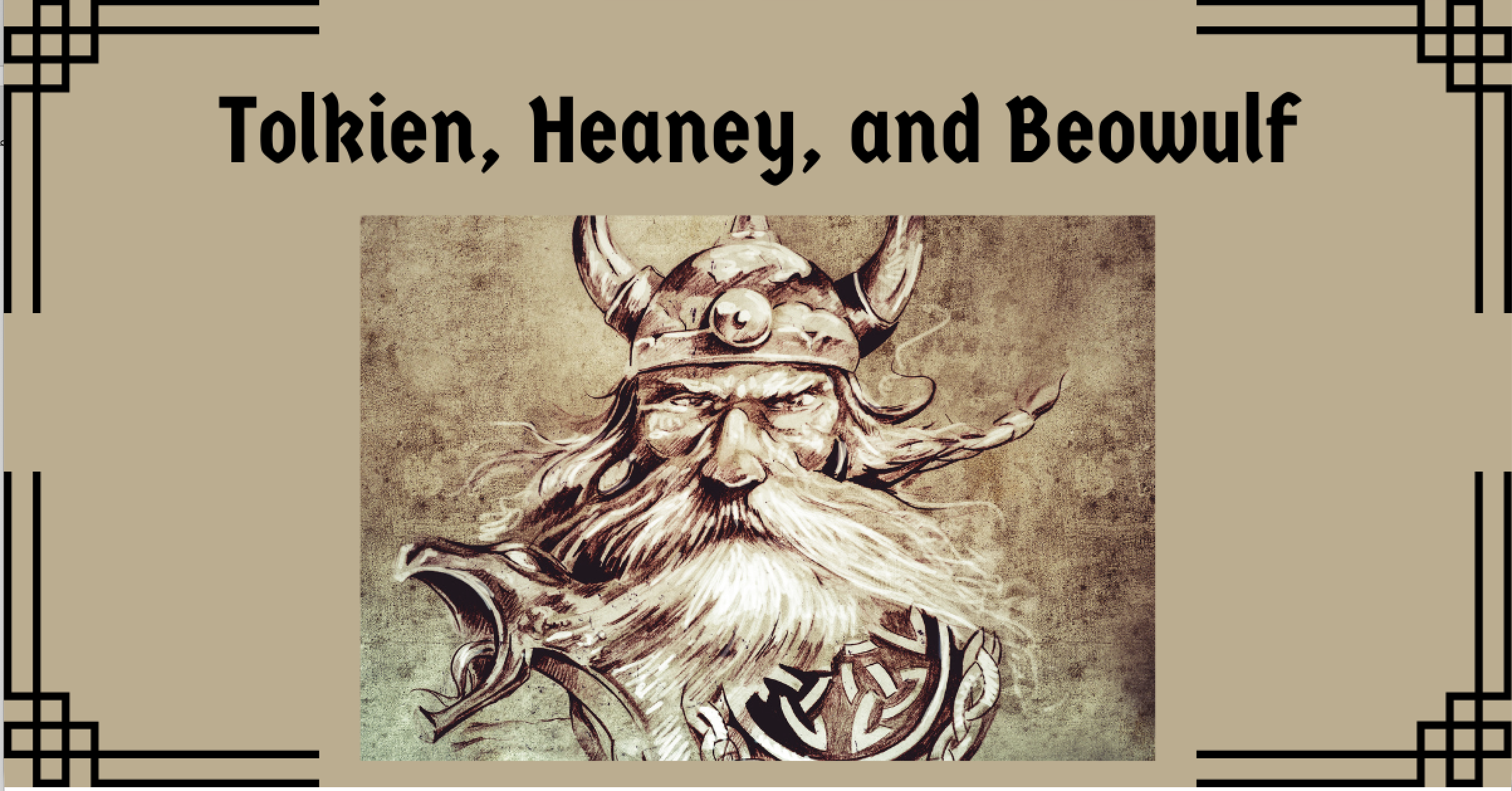
Youth is wasted on the young, and college classes are wasted on college students. When I was a junior in college, I took a History of Modern English class that seemed, at the time, drier than dust and older than dirt. To this day, all I can remember is lengthy discussions about “the great vowel shift” and the word “schwa”—both of which are far too niche to be interesting here.
However, we also translated some bits of the epic poem Beowulf from the Old English. I don’t mean Shakespeare’s English—that’s called Early Modern English. I mean Oooooold English. Like, basically Anglo-Saxon. At the time, I didn’t care about Beowulf, so this assignment was just another task. But looking back, I wish I’d soaked up more from that class (and all my classes, for that matter.) I worked hard and retained little. Again, college is wasted on college students.
To Teach Is to Learn

It wasn’t until I taught British Literature myself that I actually learned how to enjoy Old English poetry like Beowulf. By then, I’d fallen in love with Tolkien, which made Beowulf feel like a side story from Rohan. I taught the elements of Old English poetry, which isn’t anything like English poems today. No rhymes, no meter; just pure, raw, primal descriptions that use a handful of poetic devices.
For example, Old English poetry uses alliteration, repetition, and foreshadowing for dramatic effect. But it also uses kenning (two words combined to make a new, more descriptive word, like whale-path or swan-road instead of sea). It also employs litotes (understatements for dramatic effect) and caesura (a pause or break in the middle of each line, with alliteration on both sides of the caesura).
High Expectations for Beowulf
These conventions of Old English poetry may seem drier than dust and older than dirt to you, but I think they’re totally hip! I love that Old English poetry had its own set of rules to follow—not as rigid as sonnet form, perhaps, but very specific expectations for working within the genre. It gave the poets a framework to work in and gave the listeners (most of these stories were passed down verbally before being written) an enjoyable predictability in the style.
After teaching these characteristics, my expectations for a translation of Beowulf became very high—perhaps unrealistically high. In a quest to find one that meets all the criteria, I’ve read two translations in the past year. The first was a translation by J.R.R. Tolkien himself, the master linguist. The next was by Northern Irish poet Seamus Heaney, who won the Nobel Prize in Literature for his poems. If anyone can pull off a great Beowulf, it’s these guys, right?
Right?
The Cliffhanger
I hate to leave you hanging, desperately wondering which of the translations was truer to the Old English poetic tradition and which one I preferred overall. If you find yourself losing sleep over the question, here are some ideas: read and rate the books yourself, and read my series on Old English heroism. It discusses the heroic aspects of Beowulf’s character—as well as Robin Hood, Superman, and Harry Potter—in light of the characteristics of an Old English hero. A little niche, perhaps, and older than dirt for sure, but definitely not drier than dust.
Next time I’ll be bringing my verdict as well as some rather gruesome quotes from the books themselves. Instead of overwhelming you with their awesomeness (and word count) in this post, I thought you’d prefer to wait. In the meantime, enjoy the extended caesura between posts. See you next time!

One Comment on “Tolkien, Heaney, and Beowulf”
Want to leave a comment?

On Beowulf, I’ve only read Seamus Heaney. On Robin Hood, you might like my Vampire Extraction: https://archive.org/details/vampire-extraction/page/n1/mode/2up.