Because everyone loves a good story
On Pickwick, Dickens, and a New Crush
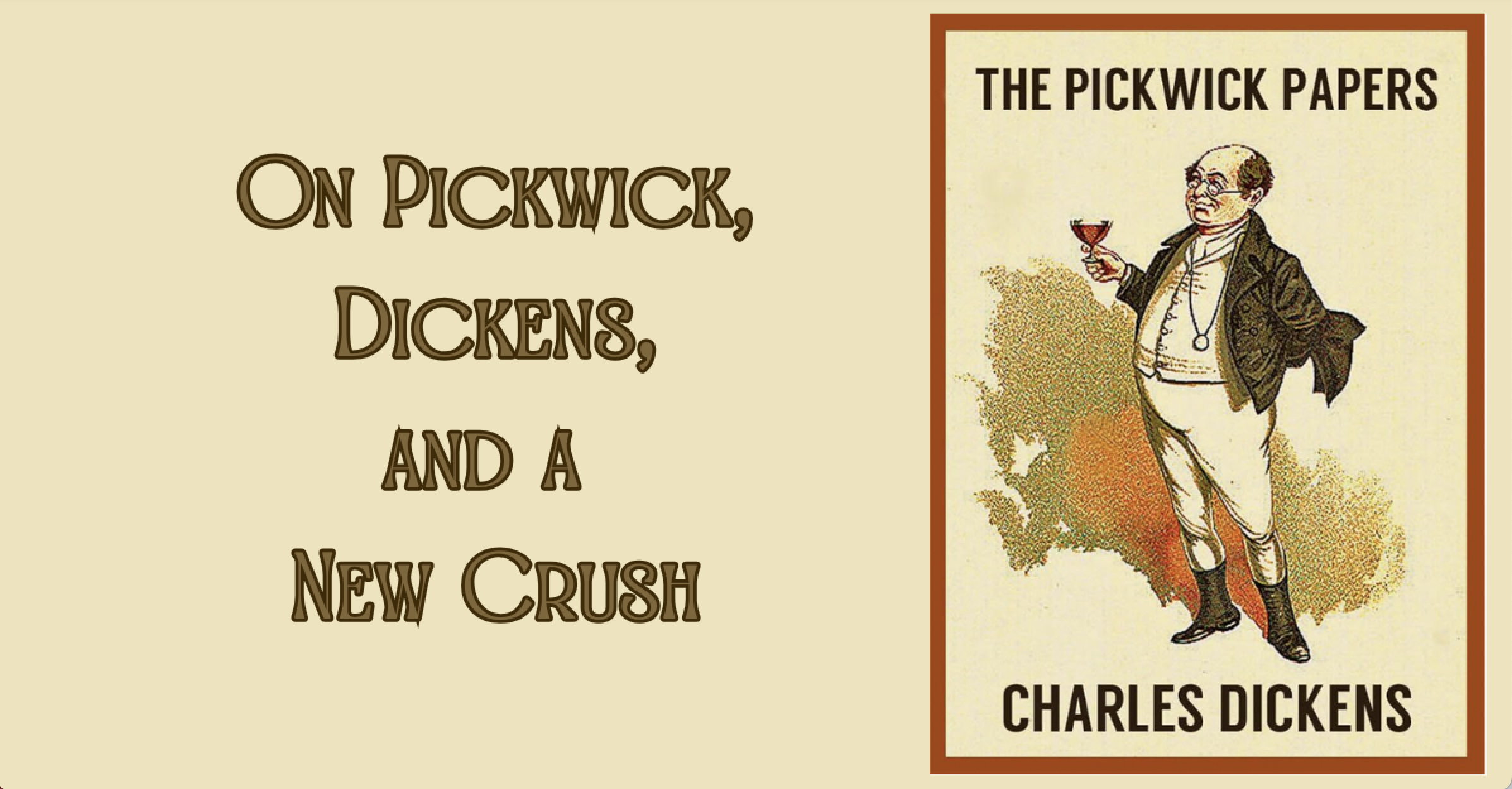
Will you despise me if I admit that, while I’ve loved reading since I was a wee child, I’d never been much of a Charles Dickens fan? I know. It’s heresy. He’s one of the greats, and I had tried (from time to time) to love him, but to no avail.
I struggled through A Tale of Two Cities as forced reading in high school and had to teach Great Expectations as a student teacher in college. Then I fastidiously avoided the rest of Dickens’ works after college. I’ve been very ashamed of myself.
But then came Pickwick.
A Felicitous Meeting

A few months ago, I was browsing a used bookstore and saw a short, fat copy of The Pickwick Papers on a shelf of classics. For some reason, I was drawn to it. Was it guilt over my standoffish attitude toward Dickens? Penance for not enjoying A Tale of Two Cities? Justification that the book was only $5? Whatever the reason, I bought it and started reading it.
I hadn’t even finished Dickens’ preface before I used my highlighter—twice! A kinship with Dickens was forming already. His first chapter was entertaining enough, although I think I’d enjoy it more if I were more familiar with the goings-on of stuffy old British club meetings. But since the book was originally published as a serial story in a magazine, I’m not even sure if Dickens knew were the story was heading when he penned chapter one. It was also the first book he’d published, so he was probably just cutting his authorial teeth, as it were.
His First and Funniest
I could tell that Dickens really dug into the characters and plot as the chapters went on. In the book, the four main members of the Pickwick Society go out in search of adventure and leisure together (adleisure?), and they find themselves in a wide assortment of scrapes along the way. I loved how Dickens brought back characters that you thought he’d finished with, carried on with running jokes, and developed character arcs through all 875 pages of small typeface. (!!!) It really was delightful.
I also appreciated his political activism throughout the book. Even though this is his earliest published work, his disgust for the legal system and his concern for social justice are just as apparent as they are in books like Oliver Twist (which I did enjoy as an audiobook this summer, at long last). But there were two main aspects that kept Pickwick soengaging that I found myself saying, “Just one more chapter.” My two favorite aspects are Dickens’ characterization and his wit.
A Company of Characters

The book begins with a list of character names and descriptions. The list takes up four full pages! Despite the vast number of characters, Dickens manages to keep them vibrant and distinct through dialect and personalities. Mr. Winkle wants to be seen as a classic British sportsman, but he’s really a poser and a bungler. Mr. Tupman is a hopeless romantic, with emphasis on the hopeless. Mr. Snodgrass thinks of himself as a great poet, even if no one else does. Mr. Jingle is a resourceful conman who keeps turning up in various forms—a true precursor to Count Olaf. Sam Weller is a scrappy boot shiner and philosopher who becomes a most loyal footman to Mr. Pickwick.
And Mr. Pickwick. Dear Mr. Pickwick.
He’s such an endearing old soul. It took me a while to really warm up to his benign, portly character, but by the end I wanted to give him a big hug. He’s honest and sincere, generous to a fault, principled without being pious, and equally ready for travel, fisticuffs, discussion, and supper. Everyone loves him, and so will you.
A Brace of Dickensian Descriptions
But what truly sets Dickens apart is his wit. His humor is so dry, ironic, understated, and British that it gets me every time. He rarely just says something. He thinks of an unexpected and picturesque way of describing it so that you can see it too. I’m a huge fan of British humor, so I’m delighted with the way Dickens peppers each page with wit.
As an example of characterization and wit all rolled into one, here follows a description of Mr. Magnus, a minor character who is breakfasting with Mr. Pickwick before proposing to a lady.
Down they sat to breakfast, but it was evident, notwithstanding the boasting of Mr. Peter Magnus, that he labored under a very considerable degree of nervousness, of which loss of appetite, a propensity to upset the tea-things, a spectral attempt at drollery, and an irresistible inclination to look at the clock, every other second, were among the principal symptoms.
“He-he-he,” tittered Mr. Magnus, affecting cheerfulness, and gasping with agitation. “It only wants two minutes, Mr. Pickwick. Am I pale, sir?”
“Not very,” replied Mr. Pickwick.
Or even this little gem:
…Mr. Phunky, blushing into the very whites of his eyes, tried to look as if he didn’t know that everybody was gazing at him: a thing which no man ever succeeded in doing yet, or in all reasonable probability, ever will.
Consider Me Converted
Since the whole book is chock-full of chuckles like this, I resorted to flipping to a random, highlighted page and including the quotes above. Trust me, you’ll find plenty more if you choose to read The Pickwick Papers yourself. Which I truly and energetically recommend.
After all these years, I think Dickens has finally grown on me.


Add a comment, and join the conversation!