Because everyone loves a good story
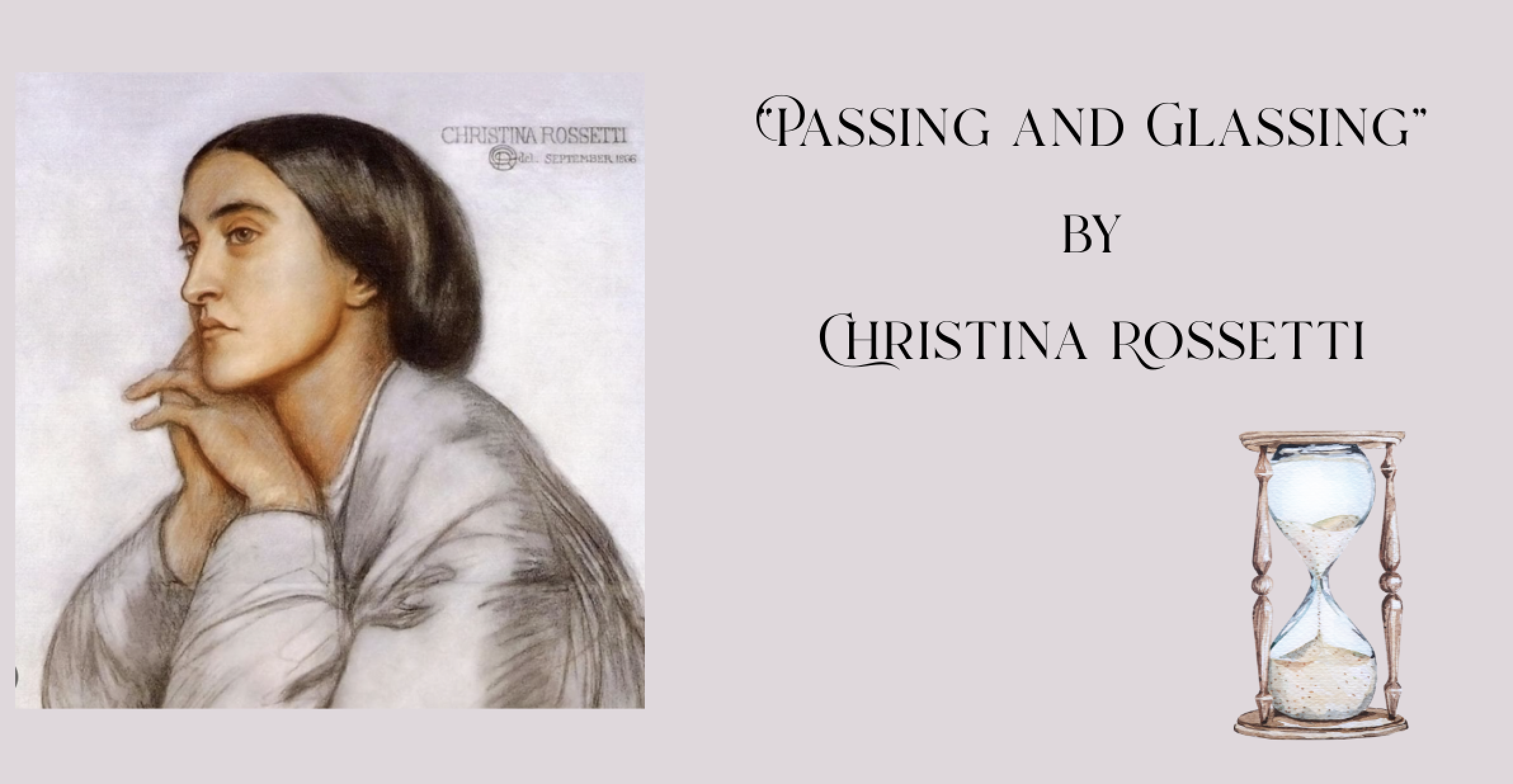
“Passing and Glassing” by Christina Rossetti
This year, my birthday was on Mother’s Day. It was a lovely day celebrating with family, and I felt doubly spoiled. But it was also a double whammy—a reminder that having kids later in life is like getting hooked up to the “machine of death” in The Princess Bride. Every day the energy and vitality get sucked out of my body at exponential speed. If only someone could bring me a Miracle Max pill.
Of course I’m being (mostly) facetious. And I won’t lie—there are times I miss what I looked and felt like 20 years ago. But would I trade what I have today for a tighter body and smoother skin? Not in a million years. Growing older is a gift, growing with family and friends around me is a blessing, and growing in love for God is priceless.
“Passing and Glassing”
Given my recent reflections, Christina Rossetti’s poem felt apropos as it examines aging from a woman’s perspective. Rossetti published it in 1881, but the sentiments are just as true today. See if you relate more to the feeling in the first or second stanza.

Stanza One: The Sad Reality

“All things that pass [away]/ are woman’s looking glass.” What a sad but accurate observation. All around us, life is falling prey to entropy. Flowers, fruit, and even a woman’s own reflection creep, moment by moment, toward decay. This reality reminds women that their loveliness is fleeting. The joy they have in the beauty and vitality of youth have an expiration date, and it’s fast approaching. Like Captain Hook, they can’t escape the ticking of the clock.
Stanza Two: A Note of Hope
“Tiring-glass” is another name for the mirror in a dressing room, and I think the word “tiring” does double duty by reminding the reader of the process of wearing down. Rossetti symbolizes this in the dead flowers on the woman’s dressing room table. But this stanza begins to introduce an aspect of comfort as well: old lavender and violets, though dried and faded, are still treasured. They are chosen, kept, and cared for. Time has not diminished their value or their sweetness. If she applies this truth to her own heart, a woman can choose comfort over despair.
Stanza Three: A Chance to Choose
Rossetti begins the final stanza by drawing attention to a crucial aspect of aging well: wisdom. Unlike aging itself, wisdom is rare. Rossetti contrasts two ways to spend life: brimful of hope and goodness or brimful of fear and ill (or harm). If a woman chooses to age with grace, there is still much to hope for as the years go by. If, however, she fears change and vilifies aging, she’ll work ill to herself and have nothing good to show for it.
The outcome is up to her own “work and will.” If she seeks wisdom from the fallen flowers, she’ll see that all has faded yesterday, all is fading today, and all will fade tomorrow. There’s no way around it. But despite the faded exterior, the value of the flower—and the woman—can become even richer with time.
Be Counter-Cultural
Our anti-aging obsession is nothing new; people have been seeking the fountain of youth since time began. Unfortunately, the recent Botox and lip filler craze may turn a generation of otherwise-lovely women into an row of grotesque dolls. If today’s pictures don’t scare our future grandchildren, I don’t know what will. Ladies, it doesn’t have to be this way.
To age is inevitable; to age gracefully is a choice. In our shallow, toxic culture, aging gracefully is a fight, but it’s a fight well worth waging. Rather than seeking an unchanging face, we have the privilege of seeking a beautiful soul. As we age, may our hearts grow more beautiful with each passing day, remembering that dried flowers are just as sweet.

3 Comments on ““Passing and Glassing” by Christina Rossetti”
Want to leave a comment?

As a woman close to 70 now, I am very aware of my face and body slowly breaking down. No botox or other things to medically try to mask the effects. I gladly embrace what’s happening. One step closer to my final destination! Blessings
Beautifully stated, Emily. The same holds true for men. Though the outer man perishes, the inner man is renewed day by day.
I’m 74 so absolutely stanza 2 but in total agreement with stanza 3. Choose wisdom, choose life.